Every street scene, parking lot, city intersection or highway shot has the same problem: it needs vehicles, and a lot of them. Modeling one convincing car with an interior, working doors and believable paint is days of work. Modeling the mix of cars, vans, trucks, buses and emergency vehicles a real street actually contains is not realistic for one scene. Downloading random car models one at a time is not much better, because they arrive with mismatched quality, materials and scale, and rarely with rigs.
Traffiq, by polygoniq, is a car and traffic library built to solve exactly that. It has been on Superhive for over six years, with more than 5,900 sales and 38 ratings, and it bundles 99 vehicle assets with 84 license plates, 218 street signs and 35 street elements, all designed to work together and stay light enough for large scenes.
Traffiq Car Library is available on Superhive.
What Is Inside the Library
The full library holds over 400 assets. According to the listing that is 99 vehicle assets, 84 license plates, 218 street signs and 35 street elements. The polygoniq documentation organizes the vehicles into clear categories, so you can go straight to what a scene needs:
- Contemporary cars: everyday modern cars such as hatchbacks, sedans, SUVs and vans, from models like the Toyota Camry, Tesla Model 3, Volkswagen Arteon and Mini Cooper Countryman.
- Classic cars: older vehicles such as the Ford Mustang 1965, Volkswagen Beetle and Volvo P1800.
- Sports cars: performance cars for hero or background use.
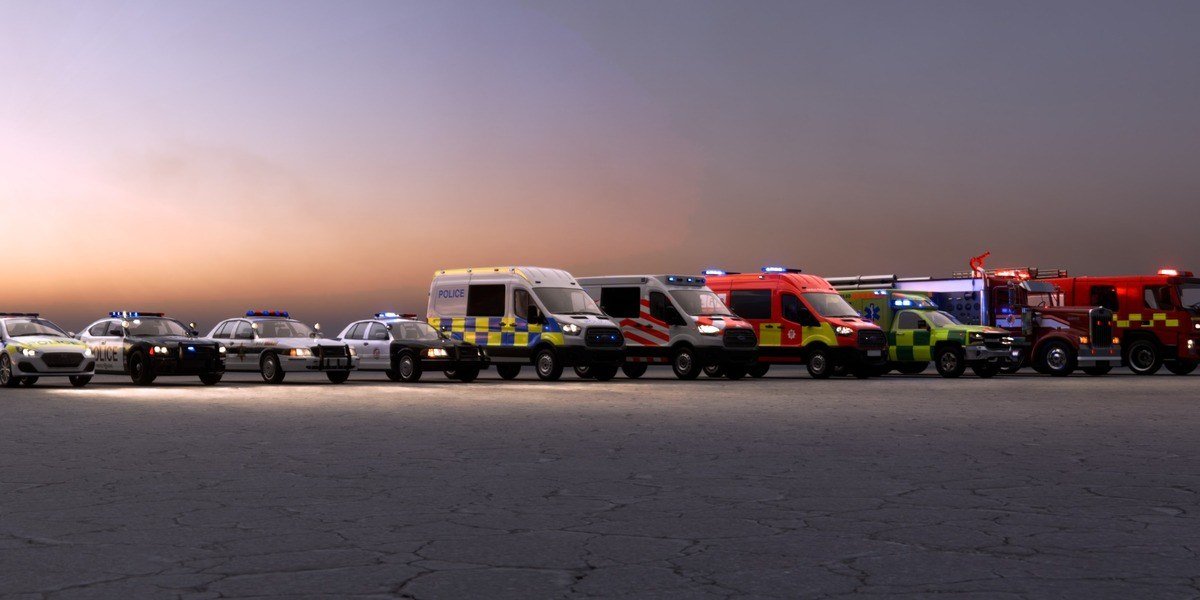
- Emergency vehicles: police cars, ambulances and fire trucks, including a Ford Transit ambulance, a Dodge Charger police car and fire trucks.
- Service and utility vehicles: delivery vans and work vehicles, including cargo variations added in the latest update.
- Public transport, motorcycles and bicycles.
- Aircraft and watercraft: a few planes, a hot air balloon and boats for airports and harbors.
- Roads, street signs and street elements: European and generic signs, a separate US sign set, plus road profiles and street furniture, so you can build the scene around the traffic.
Cars With Interiors and Working Doors
Static shells are not enough for close shots, and this is where the library separates itself from a folder of random models. The vehicles come with interiors, and an Interior Detail tag tells you how detailed a given interior is before you spawn it. All vehicles are properly rigged, and the rigs support opening doors and trunks. The 2.3 update separated and rigged doors and trunks on all cars (69 rigged vehicles) and heavily improved 34 interiors, so you can open a door for a character to get in, or show luggage in an open trunk.
Animation Controls Built In
The library ships with advanced controls aimed at animators rather than only stills. You can animate a vehicle along a curve, control its speed, and bake the wheel and steering animation. That means a car can follow a road curve with its wheels turning and its front wheels steering correctly, without you rigging a driving setup from scratch. If you animate traffic, chase scenes or fly-bys, this is the feature that saves the most time.
Wear and Tear, Color and Lights
A clean showroom car in a gritty street scene looks wrong, so the vehicles include a few sliders and attributes that change how they look without touching materials by hand:
- Wear and Tear slider: add dirt, scratches and bumps with a few clicks.
- Custom color: change the paint color, the amount of metallic flakes and the clear coat through attributes that drive the materials, so one car model can appear in many colors.
- Lights: set a vehicle's lights to one of three premade settings: park, low-beam or high-beam. That is useful for night scenes and for making a street feel alive.
License Plates You Can Customize
Blank or fake plates are a classic giveaway in a 3D street scene. Traffiq includes a license plate library and a generator, so plates match the region of your scene. The listing mentions 50 US plates, one Canadian plate and 31 European plates, and the documentation shows plates for many US states and European countries, plus Turkey. The plate text can be customized, and wear sliders were added in the 2.2.1 update for weathered plates.
See It in Action
polygoniq's video for the latest major update shows the library in the viewport, including the cargo vehicles, which is a fast way to judge the asset quality before deciding.
Video by polygoniq (the creator of traffiq). Not made by BeingAnimator.
If you are building a full environment around these vehicles, our picks for Botaniq Trees and Humaniq come from the same creator and use the same asset browser, so the cars, plants and people all install and spawn the same way.
Built for Big Scenes
The polygoniq approach across its libraries is optimization first. The pitch for traffiq is the same as the rest of the family: optimized assets with a small memory footprint so large scenes stay smooth. Like their other libraries, the assets are consistent, so materials and quality match and you can mix vehicles freely in one scene without anything looking out of place. The library supports Cycles and Eevee.
The Latest Update
The most recent update listed is traffiq 2.4.0 from September 2025. It added cargo assets: 11 variations of existing vehicles (a pizza delivery car, a delivery truck with boxes, a flower shop car, and vehicles with suitcases and bags in the trunk) and 13 Kenworth truck variations with different trailers, such as reefer, curtainside and dry-van, with branding. It also carried a long list of fixes to lights, glass shading, rigs and materials. The library has had 16 updates in total, which is a good sign of long-term support. As always, check the product page for the newest version.
License: Read This Before Commercial Use
This is the most important practical detail, and the listing shows the license as "Editorial". polygoniq's license page explains it in two parts:
- Brand assets, Editorial license. Assets that represent real-world brands, which includes cars modeled on real makes and models, are licensed for editorial use. For personal and commercial use you may need additional licensing, rights, permissions or clearance for non-editorial use. Obtaining that clearance is the buyer's responsibility, especially for anything containing copyrighted or trademarked images, logos or brand names.
- Other assets, Royalty free. Assets that do not belong to a brand are royalty free for personal, educational and commercial purposes.
- Both licenses forbid reselling, redistributing or repackaging the product, and using it in a logo, watermark or trademark.
In plain terms: if you are making a film, a game or an advertisement that shows recognizable car brands, make sure you understand and, if needed, clear the rights first. When in doubt, polygoniq points buyers to their Discord server. We are not lawyers, so read the license page on the product before you rely on it commercially.
Pick a Size That Fits
You do not have to buy everything. Prices on Superhive at the time of writing are:
- traffiq starter (about 4% of the library): $1.99.
- traffiq lite (about 40% of the library): $39.99.
- traffiq full (100% of the library): $77.77.
- Studio licenses for 2 to 5 seats ($149.99) and 6 to 10 seats ($209.99), each with the full library.
Purchases include 12 months of support and updates, and the license is permanent afterward. Renewing for later updates is optional and discounted. Prices change with sales, so check the product page for the current figure.
Who This Is For
- Archviz and environment artists who need believable traffic and street details around buildings.
- Animators making chase scenes, fly-bys or city shots who need cars with working wheels and steering.
- Game and previz artists who want a consistent, ready-to-use vehicle set.
- Motion designers who need a truck, van or police car in a shot without modeling one.
Who Should Think Twice
If you need commercial work that clearly shows real car brands, check the Editorial license and plan for clearance. If you need one hero car with extreme close-up detail and photoreal interior, a dedicated single-car model may suit better than a library aimed at scene-scale use. And if you only need one or two vehicles, the starter tier is a cheap way to test the quality first.
If your scenes need traffic and you would rather spend your time on the shot than on modeling cars, a consistent, rigged library with plates, signs and animation controls is one of the fastest ways to get there. Start with the low-cost tier, check the license fits your project, and scale up if it works for you.
Traffiq Car Library is available on Superhive.